Stocks were looking firm on Tuesday after Monday’s drop turned out to not be as deep as feared. Investors are proving able and willing to step in and look for opportunity in pullbacks and overlooked stock stories. Each morning 24/7 Wall St. reviews dozens of brokerage analyst reports for new investment and trading ideas for its readers. Some of these reports cover stocks to buy, but some also cover stocks to sell or to avoid.
These are this Tuesday’s top analyst upgrades, downgrades and initiations covered by 24/7 Wall St.
Alcoa Inc. (NYSE: AA) was raised to Buy from Neutral and the price target was raised to $18 from $16 at Bank of America Merrill Lynch.
Apple Inc. (NASDAQ: AAPL) was started as Hold with a $110 price target (versus a $100.11 close) at Jefferies. While this is a Hold rating rather than a Buy rating, note that the consensus analyst price target of $110.79 is less than $1 higher than this target issued today — and this target still implies 10% upside plus the dividend.
Computers Science Corp. (NYSE: CSC) was raised Outperform from Market Perform at Raymond James.
Lockheed Martin Corp. (NYSE: LMT) was raised to Buy from Hold at Stifel.
Toyota Motor Corp. (NYSE: TM) was raised to Overweight from Neutral at J.P. Morgan.
Athlon Energy Inc. (NYSE: ATHL) was downgraded to Neutral from Buy at UBS. Canaccord Genuity downgraded it to Hold from Buy as well.
Century Aluminum Co. (NASDAQ: CENX) was raised to Buy from Neutral and the price target was raised to $30 from $21 (versus a $23.86 close) at Merrill Lynch.
Great Plains Energy Inc. (NYSE: GXP) was maintained as Buy but the price target was cut to $29 from $32 (versus a $24.29 close) at Argus, due to earnings pressure from increases in transmission and distribution expenses and higher generation expenses.
Kellogg Co. (NYSE: K) was downgraded to Underweight from Equal Weight and the price target was set at $58 (versus a $61.81 close) at Morgan Stanley.
Mellanox Technologies Ltd. (NASDAQ: MLNX) was raised to Overweight from Neutral at Piper Jaffray.
NiSource Inc. (NYSE: NI) was raised to Outperform from Neutral at Credit Suisse, on the heels of its spin-off news.
NuVasive Inc. (NASDAQ: NUVA) was raised to Buy from Hold at Brean Capital.
Patterson-UTI Energy Inc. (NASDAQ: PTEN) was raised to Equal Weight from Underweight at Morgan Stanley.
Raytheon Co. (NYSE: RTN) was raised to Buy from Hold at Stifel.
Seattle Genetics Inc. (NASDAQ: SGEN) was downgraded to Underperform from Neutral at Merrill Lynch.
Teekay Corp. (NYSE: TK) was raised to Buy from Hold at Deutsche Bank
Tuesday, September 30, 2014


Gilead is kicking more ass
Call it Gilead Sciences' (NASDAQ: GILD ) stealth play.
Gilead is the king of the HIV business. Its wildly successful Sovaldi launch is without a doubt the biggest biotech event of the year. But the company's experimental cancer drug pipeline is a different story, one that has encountered numerous setbacks.
Perhaps that's why the EU's recent approval of Gilead's targeted P13K inhibitor, Zydelig, flew mostly under the radar. Despite treatment for leukemia and other blood cancers being one of the fastest growing markets for cancer drugs, the event received little analyst attention. I believe that could be a mistake, because Gilead has been laying a foundation for oncology since 2011, with a savvy string of deals that set the stage for success even greater than Sovaldi and HIV drugs. Targeted oncology is entering an era where significant advances are being made, and while a ton of things could go wrong, Zydelig's approval is more than just an isolated stroke of luck. It's the first step in building a solid franchise.
The European Commission approved Zydelig (idelalisib) in mid-September; two months after the FDA approved the first-in-class oral treatment for several incurable blood cancers, including relapsed chronic lymphocytic leukemia (CLL). CLL is a slow-moving disease that can require treatment over years, opening up a chance for billions of dollars in revenue.
According to EvaluatePharma estimates, the drug could generate $1.2 billion in peak sales by 2020. Stanford Bernstein analyst Geoff Porges sees a higher and faster growth curve, based on Zydelig's potential for non-Hodgkin's lymphoma. He predicts $1.5 billion in Zydelig sales by 2017.
In the United States, the FDA's green lighting of Zydelig extends beyond relapsed CLL to follicular lymphoma (FL), and relapsed small lymphocytic lymphoma (SLL). Coming out of the gate with three indications in the U.S. and two in Europe (FL and CLL) could put the giant biotech on track to become a cancer powerhouse.
The real victory, however, goes beyond the numbers.
Fantastic results
Zydelig works by blocking overactive PI3K-delta signaling, cutting off a key contributor to cancer growth in B-cell leukemias and lymphomas. The drug's approval in the EU came from a placebo-controlled trial in 220 patients that stopped early, after the drug showed significantly longer progression-free survival.
Some of the responses seen with Zydelig were "incredible" and came within a week, according to Richard Furman, MD, from the Weil Cornell Medical College in New York City. Dr. Furman, author of the results for The New England Journal of Medicine, commented, "It is remarkable how quickly idelalisib (Zydelig) worked in this heavily treated group of patients, many of whom were resistant to chemotherapy... Their cancer quickly melted away."
The push into blood-cancer research has helped redefine the lives of people who have these diseases, said Hildy Dillon, senior vice president of patient services at the Leukemia & Lymphoma Society. "I've been in oncology for over 30 years, and people did not survive these diseases," Dillon said. "And now, as we develop newer therapies, we are extending the lives of these patients."
The results in blood cancer are heartening, but they're also in stark contrast to another Gilead oncology candidate, simtuzumab, which failed its Phase 2 study for advanced pancreatic cancer this month. Simtuzumab is still in clinical trials for other areas of unmet medical needs, including idiopathic pulmonary fibrosis, but it has a lot to prove.
In fact, simtuzumab's failure with pancreatic cancer has left the company open to the criticism that it will end up being successfully cutting edge in everything except oncology.
Side effects and competition
In terms of Zydelig, targeted or not, patients could encounter numerous serious side effects. In the U.S., a black-box warning on the product that highlights the possibility of colitis, lung inflammation, and potentially fatal liver problems could slow acceptance.
Zydelig has formidable competition from Johnson & Johnson's (NYSE: JNJ ) and Pharmacyclics' (NASDAQ: PCYC ) Imbruvica (ibrutinib). Imbruvica doesn't have a black box warning. And there's more competition coming from AbbVie with ABT-199, which is in late-stage development.
Recognizing the challenge, Gilead has priced Zydelig slightly lower than Imbruvica, at $7,200 compared with $8,200. Another point in Zydelig's favor is that while the European Commission approved Zydelig quickly, Imbruvica has yet to receive EU approval.
With Sovaldi sales trouncing estimates, potentially reaching $10 billion this year, Gilead could easily achieve its goal of doubling its 2013 revenue. But having such a huge single contributor makes Gilead more vulnerable, especially given the pushback on the drug's $1,000-a-pill price tag. Despite the striking guidance and quarter numbers, it's wise not to lose sight of the rest of the company's pipeline.
Gilead is the king of the HIV business. Its wildly successful Sovaldi launch is without a doubt the biggest biotech event of the year. But the company's experimental cancer drug pipeline is a different story, one that has encountered numerous setbacks.
Perhaps that's why the EU's recent approval of Gilead's targeted P13K inhibitor, Zydelig, flew mostly under the radar. Despite treatment for leukemia and other blood cancers being one of the fastest growing markets for cancer drugs, the event received little analyst attention. I believe that could be a mistake, because Gilead has been laying a foundation for oncology since 2011, with a savvy string of deals that set the stage for success even greater than Sovaldi and HIV drugs. Targeted oncology is entering an era where significant advances are being made, and while a ton of things could go wrong, Zydelig's approval is more than just an isolated stroke of luck. It's the first step in building a solid franchise.
The European Commission approved Zydelig (idelalisib) in mid-September; two months after the FDA approved the first-in-class oral treatment for several incurable blood cancers, including relapsed chronic lymphocytic leukemia (CLL). CLL is a slow-moving disease that can require treatment over years, opening up a chance for billions of dollars in revenue.
According to EvaluatePharma estimates, the drug could generate $1.2 billion in peak sales by 2020. Stanford Bernstein analyst Geoff Porges sees a higher and faster growth curve, based on Zydelig's potential for non-Hodgkin's lymphoma. He predicts $1.5 billion in Zydelig sales by 2017.
In the United States, the FDA's green lighting of Zydelig extends beyond relapsed CLL to follicular lymphoma (FL), and relapsed small lymphocytic lymphoma (SLL). Coming out of the gate with three indications in the U.S. and two in Europe (FL and CLL) could put the giant biotech on track to become a cancer powerhouse.
The real victory, however, goes beyond the numbers.
Fantastic results
Zydelig works by blocking overactive PI3K-delta signaling, cutting off a key contributor to cancer growth in B-cell leukemias and lymphomas. The drug's approval in the EU came from a placebo-controlled trial in 220 patients that stopped early, after the drug showed significantly longer progression-free survival.
Some of the responses seen with Zydelig were "incredible" and came within a week, according to Richard Furman, MD, from the Weil Cornell Medical College in New York City. Dr. Furman, author of the results for The New England Journal of Medicine, commented, "It is remarkable how quickly idelalisib (Zydelig) worked in this heavily treated group of patients, many of whom were resistant to chemotherapy... Their cancer quickly melted away."
The push into blood-cancer research has helped redefine the lives of people who have these diseases, said Hildy Dillon, senior vice president of patient services at the Leukemia & Lymphoma Society. "I've been in oncology for over 30 years, and people did not survive these diseases," Dillon said. "And now, as we develop newer therapies, we are extending the lives of these patients."
The results in blood cancer are heartening, but they're also in stark contrast to another Gilead oncology candidate, simtuzumab, which failed its Phase 2 study for advanced pancreatic cancer this month. Simtuzumab is still in clinical trials for other areas of unmet medical needs, including idiopathic pulmonary fibrosis, but it has a lot to prove.
In fact, simtuzumab's failure with pancreatic cancer has left the company open to the criticism that it will end up being successfully cutting edge in everything except oncology.
Side effects and competition
In terms of Zydelig, targeted or not, patients could encounter numerous serious side effects. In the U.S., a black-box warning on the product that highlights the possibility of colitis, lung inflammation, and potentially fatal liver problems could slow acceptance.
Zydelig has formidable competition from Johnson & Johnson's (NYSE: JNJ ) and Pharmacyclics' (NASDAQ: PCYC ) Imbruvica (ibrutinib). Imbruvica doesn't have a black box warning. And there's more competition coming from AbbVie with ABT-199, which is in late-stage development.
Recognizing the challenge, Gilead has priced Zydelig slightly lower than Imbruvica, at $7,200 compared with $8,200. Another point in Zydelig's favor is that while the European Commission approved Zydelig quickly, Imbruvica has yet to receive EU approval.
With Sovaldi sales trouncing estimates, potentially reaching $10 billion this year, Gilead could easily achieve its goal of doubling its 2013 revenue. But having such a huge single contributor makes Gilead more vulnerable, especially given the pushback on the drug's $1,000-a-pill price tag. Despite the striking guidance and quarter numbers, it's wise not to lose sight of the rest of the company's pipeline.
Monday, September 29, 2014
10 sweet iPhone cases and who makes them. Will they protect the screen??
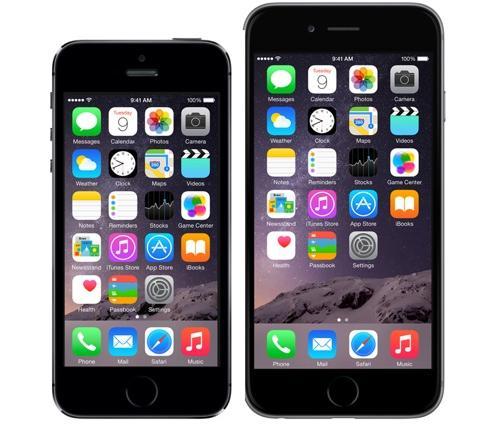
Smartphone cases have gone from a necessary evil that protect your phone from the inevitable bumps and bruises of everyday life to sophisticated fashion statements.
And the newest crop of cases and bumpers for the iPhone 6 and 6 Plus are no different. We’re talking about cases that range from beefy pieces of rubbery plastic to shells made of all-natural wood and leather, and everything in between.
In other words, if you’re looking for some new cases for your iPhone 6 or 6 Plus, you might want to start with these.
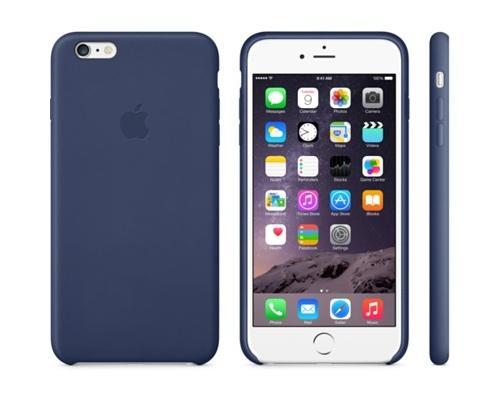
Apple’s own leather cases for the iPhone 6 and 6 Plus are as simple as cases get. Priced at $45 and $49 for the 6 and 6 Plus, respectively, Apple promises that these leather cases will protect your phone without adding much bulk.
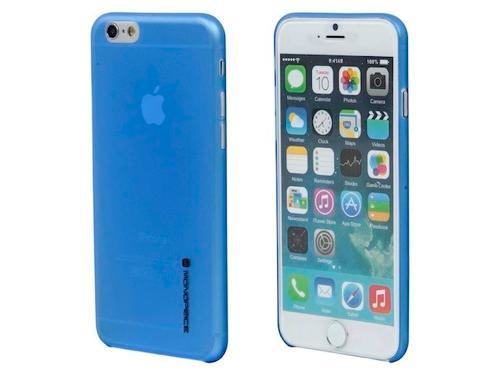
Monoprice’s ultra-thin shatterproof case for the iPhone 6 is available for just $5.60 and will protect your precious smartphone against the nicks and cuts that result from everyday drops. It won’t, however, protect your screen much. So if your iPhone face-plants, its screen is still at risk of shattering. But if you want a case for your phone and don’t want to spend $50, you can’t go wrong with this one.
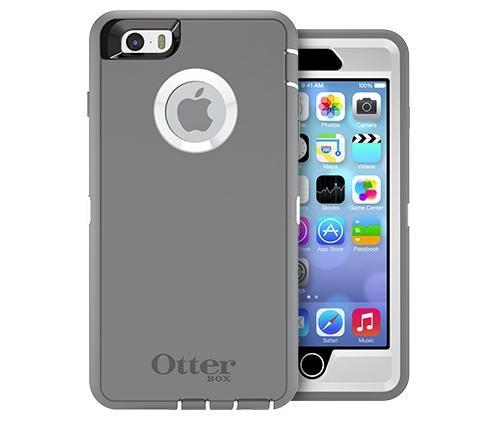
OtterBox is known for offering super-sturdy smartphone cases, and its Defender Series is the company’s beefiest of all. Priced at $59.90 and $69.60 for the iPhone 6 and 6 Plus, respectively, the Defender Series packs three layers of protection, a built-in screen protector, and port covers to protect against dust. And for everyone stuck in 2009, the Defender also includes a belt holster that doubles as a kickstand.
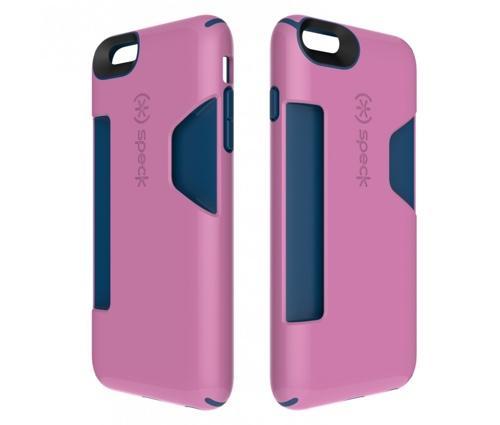
Want to protect your iPhone and ditch your wallet? The Speck CandyShell Card Case has you covered. Offering an impact-resistant outer coating and a raised bezel to protect your phone’s display, the Card Case is seriously durable. What’s more, its backside features room for three credit cards and some folded bills. Priced at $39 for the iPhone 6 and $44 for the iPhone 6 Plus, it’s a 2-for-1 special for your smartphone.

If you want to add some extra pizazz to your iPhone 6 or 6 Plus, look no further than Case-Mate’s Brilliance Case. At $80 for both iPhone 6 and 6 Plus models, the Brilliance Case’s back panel is covered in shimmering crystals. The Brilliance isn’t just a pretty face, though. It also offers dual-layer protection, and its bezel extends past the iPhone’s display to keep it from smacking against the floor if you drop it face-down.
![Stowaway [Advance] iPhone case from Incipio](https://s.yimg.com/cd/resizer/2.0/FIT_TO_WIDTH-w500/e739a9071438f6e957e96f509455458472e898f0.jpg)
7. Radius v2

The folks at BiteMyApple call this case the bikini of iPhone cases, and for good reason. The Radius v2 uses the bare minimum of material needed to cover and protect your iPhone 6 ($79) or 6 Plus ($89) from drops, bumps, and bruises. Unlike most cases, the Radius v2 doesn’t completely cover up the iPhone 6’s beautiful shell. The trade-off is that it also leaves the phone more exposed, making it susceptible to scratches and nicks. That said, it certainly looks cool.

The iPhone 6 and 6 Plus have taken some knocks for being a bit more slippery than their predecessors. Griffin Technology’s Identity Performance case ($40) seeks to solve that problem with a no-skid back panel. And if your phone does slip from your grasp, the Identity Performance’s shell will protect it from drops as high as 4 feet. An included reusable screen protector will also keep your iPhone’s display safe from scratches and nicks.

Grovemade’s Walnut and Leather iPhone Case lets your iPhone go au naturel without you having to fear that it’ll break if it slips from your hand. That’s because, Grovemade’s cases are made using all-natural walnut wood. Get it, naturel, natural? … Anyway, the Walnut and Leather iPhone Case protects your iPhone from falls while also doubling as a stand thanks to its flexible leather cover. These handcrafted cases cost $129 for the iPhone 6 and $139 for the 6 Plus.

Tech21’s cases use a special D30 material that is both flexible and durable to help absorb impacts from falls. They’ve smashed the stuff with a hammer in demonstrations, and it doesn’t break. Available for $35 for the iPhone 6 and $39 for the 6 Plus, the Classic Shell offers protection for both the front and back of your precious smartphone. But please don’t try the hammer thing.
Invensense MPU-6500 sales to be lower due to issues; less iphones to be serviced
The MPU-6500 is the company’s second generation 6-axis MotionTracking device for smartphones, tablets, wearable sensors , and other consumer markets. The MPU-6500, delivered in a 3x3x0.9mm QFN package, is the world’s smallest 6-axis MotionTracking device and incorporates the latest InvenSense design innovations for MEMS gyroscopes and accelerometers, enabling dramatically reduced chip size and power consumption, while at the same time improving performance and cost. The new MPU-6500 addresses the market requirements for high performance applications such as pedestrian navigation, context-aware advertising, and other location-based services, along with supporting the specifications for emerging wearable sensor applications such as remote health monitoring, sports and fitness tracking, and other consumer applications. The MPU-6500 MotionTracking device sets a new benchmark for 6-axis performance with nearly 60% lower power, a 45% smaller package, industry-leading consumer gyroscope performance, and major improvements in accelerometer noise, bias, and sensitivity.
The single-chip MPU-6500 integrates a 3-axis accelerometer, a 3-axis gyroscope, and an onboard Digital Motion Processor™ (DMP) in a small 3x3x0.9mm QFN package. The new 6-axis device is the world’s first motion sensor to operate at 1.8 volts and consumes only 6.1mW of power in full operating mode; it incorporates breakthrough gyroscope performance of only ±5dps zero-rate-output and 0.01dps/√Hz of noise; and delivers dramatically improved accelerometer specifications including a typical offset of only ±60mg, 250µg/√Hz of noise, and only 18µA of current in low-power mode.
The MPU-6500 software drivers are fully compliant with Google’s Android 4.1 Jelly Bean release, and support new low-power DMP capabilities that offload the host processor to reduce power consumption and simplify application development. The MPU-6500 includes MotionFusion and run-time calibration firmware enables consumer electronics manufacturers to commercialize cost effective motion-based functionality.
Rosenblatt Securities is changing its stance on from bullish to cautious, and says there's a risk of the company losing 50%-100% of its iPhone 6 sales due to technical issues.
Specifically, Rosenblatt says the problem is related to the "technical instability" of InvenSense's 6-axis MPU-6700 gyroscope/accelerometer, something that possibly affects how it interacts with some iPhone features.
Baird downgraded InvenSense last week, while reporting a major smartphone OEM could be switching to a dual-source strategy for gyroscopes and other components.
Pac Crest took the note to suggest Apple is using a Bosch accelerometer in the iPhone 6 to go with InvenSense's motion sensor. The firm downplayed the importance of the move, arguing Apple simply wants to lower power draw by including a standalone accelerometer.
The single-chip MPU-6500 integrates a 3-axis accelerometer, a 3-axis gyroscope, and an onboard Digital Motion Processor™ (DMP) in a small 3x3x0.9mm QFN package. The new 6-axis device is the world’s first motion sensor to operate at 1.8 volts and consumes only 6.1mW of power in full operating mode; it incorporates breakthrough gyroscope performance of only ±5dps zero-rate-output and 0.01dps/√Hz of noise; and delivers dramatically improved accelerometer specifications including a typical offset of only ±60mg, 250µg/√Hz of noise, and only 18µA of current in low-power mode.
The MPU-6500 software drivers are fully compliant with Google’s Android 4.1 Jelly Bean release, and support new low-power DMP capabilities that offload the host processor to reduce power consumption and simplify application development. The MPU-6500 includes MotionFusion and run-time calibration firmware enables consumer electronics manufacturers to commercialize cost effective motion-based functionality.
Rosenblatt Securities is changing its stance on from bullish to cautious, and says there's a risk of the company losing 50%-100% of its iPhone 6 sales due to technical issues.
Specifically, Rosenblatt says the problem is related to the "technical instability" of InvenSense's 6-axis MPU-6700 gyroscope/accelerometer, something that possibly affects how it interacts with some iPhone features.
Baird downgraded InvenSense last week, while reporting a major smartphone OEM could be switching to a dual-source strategy for gyroscopes and other components.
Pac Crest took the note to suggest Apple is using a Bosch accelerometer in the iPhone 6 to go with InvenSense's motion sensor. The firm downplayed the importance of the move, arguing Apple simply wants to lower power draw by including a standalone accelerometer.
Tuesday, September 23, 2014
3D systems gets huge deal???
3D Systems (NYSE: DDD) gained Tuesday on reports it may have entered into an unexpected Bluebird pact with General Motors (NYSE: GM) in Q3. The deal could be worth $6-$8 million, said Piper Jaffray analyst Troy Jensen, citing industry contacts.
"To our knowledge Detroit experienced significant rainfall over a short period of time and this caused a flood in General Motors Rapid Prototyping facility. The flooded facility was rumored to have up to 5 feet of water and the water had sewage mixed in with it. This ultimately ruined multiple machines and we believe General Motors purchased or ordered 11 iPro 8000s (list for roughly $600K) and a couple of SinterStation machines in the September quarter," said Jenson.
"Given this deal was likely not in 3D Systems pipeline, we believe it will provide a boost to the company's system revenues/backlog in the September quarter," he added.
This news gave a boost that DDD Really needed as the sector has been cold of late on positive catalysts and the stocks have been sufferred
"To our knowledge Detroit experienced significant rainfall over a short period of time and this caused a flood in General Motors Rapid Prototyping facility. The flooded facility was rumored to have up to 5 feet of water and the water had sewage mixed in with it. This ultimately ruined multiple machines and we believe General Motors purchased or ordered 11 iPro 8000s (list for roughly $600K) and a couple of SinterStation machines in the September quarter," said Jenson.
"Given this deal was likely not in 3D Systems pipeline, we believe it will provide a boost to the company's system revenues/backlog in the September quarter," he added.
This news gave a boost that DDD Really needed as the sector has been cold of late on positive catalysts and the stocks have been sufferred
Subscribe to:
Posts (Atom)